A business line of credit is a flexible financing solution that gives your company access to a set amount of money that you can draw from whenever needed. Unlike a traditional business loan, where you receive a lump sum upfront and start repaying immediately, a line of credit works like a revolving account—you borrow what you need, when you need it, and only pay interest on the amount used. It’s an ideal tool for managing cash flow, covering short-term expenses, and seizing time-sensitive opportunities without overcommitting to long-term debt.
When running a business, cash flow isn’t just king—it’s survival. Whether you’re managing seasonal fluctuations, investing in new opportunities, or simply handling unexpected expenses, access to flexible funding can make or break your operations. One of the most powerful yet underutilized tools for this is the business line of credit.
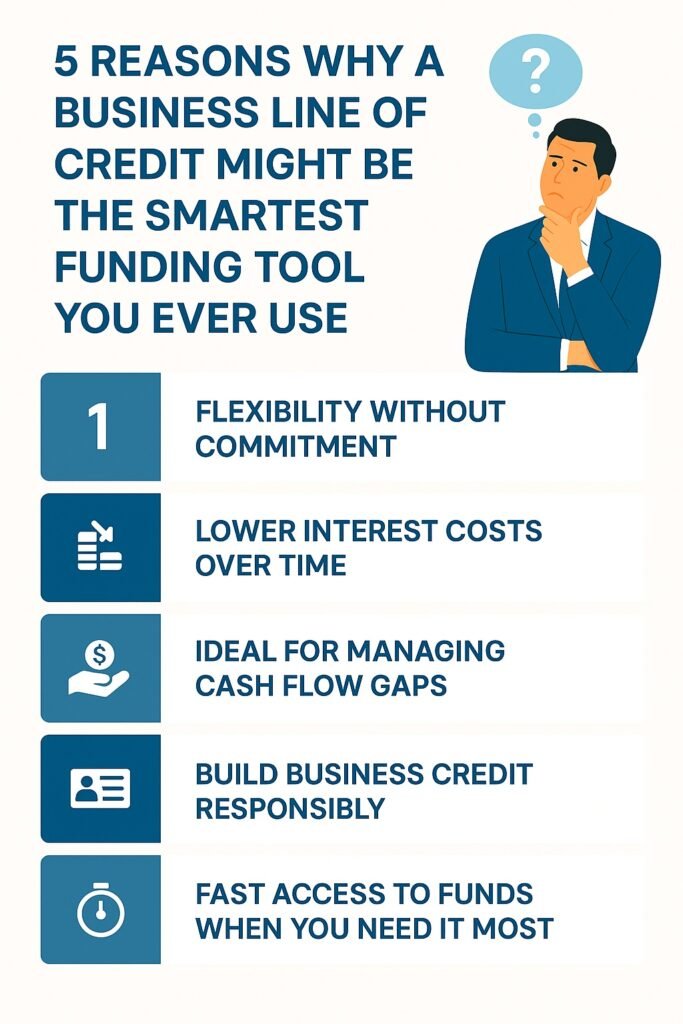
1. Flexibility Without Commitment
Traditional loans are rigid. You apply once, receive a fixed amount, and begin repaying it—whether or not you end up needing all of the money. A business line of credit works more like a credit card: you’re approved for a maximum limit and can draw funds whenever necessary. Repay what you use, and the credit becomes available again.
This revolving structure means you’re not tied down by inflexible loan terms. If your business faces an unexpected expense—like broken equipment or a large order from a key client—you can handle it instantly, without scrambling for emergency capital.
2. Lower Interest Costs Over Time
Many entrepreneurs hesitate to borrow because they fear high interest payments. But with a business line of credit, you only pay interest on the funds you actually use. If you’re approved for $100,000 but only use $10,000 during a slow month, your interest is based solely on that $10,000.
This makes it an efficient option for managing working capital. In contrast to term loans or merchant cash advances, which often come with steep fees and rigid repayment schedules, a line of credit offers cost-effective borrowing—especially if you repay quickly.
Some lenders even offer interest-only payments during the draw period, which can reduce your short-term cash outflow even further.
3. Ideal for Managing Cash Flow Gaps
Most businesses—especially in retail, construction, agriculture, and B2B services—deal with uneven cash flow. You might have periods of high expenses followed by long waits for incoming payments. A line of credit allows you to bridge those gaps smoothly.
You can cover payroll, inventory purchases, or vendor invoices while waiting for receivables to clear. Instead of halting operations or delaying growth decisions, your business continues running at full speed.
Many business owners use a line of credit to maintain consistent operations even when revenue is unpredictable. It’s not about borrowing because you’re failing—it’s about preparing so you never have to.
4. Build Business Credit Responsibly
A lesser-known advantage of using a business line of credit is that it helps you build business credit. As long as you make timely payments and use the line wisely, your business can establish a strong credit profile. That opens the door to larger financing opportunities in the future, such as SBA loans, equipment financing, or commercial mortgages.
A good business credit score can also reduce your insurance premiums, improve vendor terms, and attract investor confidence. It’s an asset you build over time—and a business line of credit is one of the best ways to start.
5. Fast Access to Funds When You Need It Most
Speed matters in business. Opportunities come and go quickly—whether it’s buying discounted inventory, launching a campaign, or outbidding a competitor on a key asset. With a business line of credit already in place, you can move immediately.
This is especially useful in times of uncertainty or recession, when traditional lending tightens. Having a pre-approved line in your back pocket means you’re not scrambling for funds during a downturn—you’re already prepared.
That speed and certainty gives you leverage over competitors who are stuck in approval queues.
How to Qualify for a Business Line of Credit
Approval criteria vary by lender, but most providers consider your:
- Time in business (typically at least 6–12 months)
- Annual revenue
- Personal and business credit scores
- Bank statements and cash flow history
Online lenders may have looser requirements and faster approvals, but may charge slightly higher interest rates. Banks typically offer better terms but slower processes.
To maximize your chances, make sure your financial statements are accurate, your credit history is clean, and your business has a stable revenue track.
Business Line of Credit vs Business Credit Card
While they share similarities, a business line of credit is typically larger, has lower interest rates, and may offer longer repayment terms. Unlike a credit card, which is often unsecured and high-interest, a line of credit can be secured with business assets or receivables.
Lines of credit are more suited for operational costs and large expenses, while business credit cards are better for small recurring charges or travel costs.
Final Thoughts
A business line of credit gives you freedom—freedom to respond, grow, and protect your company’s momentum. It’s not just a funding tool; it’s a strategic asset. Whether you’re managing slow receivables or seizing an unexpected growth opportunity, having this flexible resource available could mean the difference between stagnation and success.
Don’t wait until you’re desperate for cash. The best time to open a line of credit is before you need it.
Related Articles on BusinessAndWealthWithJames.com:
- Business Insurance – Protect your company from the unexpected
Other resources
Disclaimer: This article is for informational purposes only and does not constitute financial, legal, or tax advice. Please consult a professional advisor for personalized guidance.